

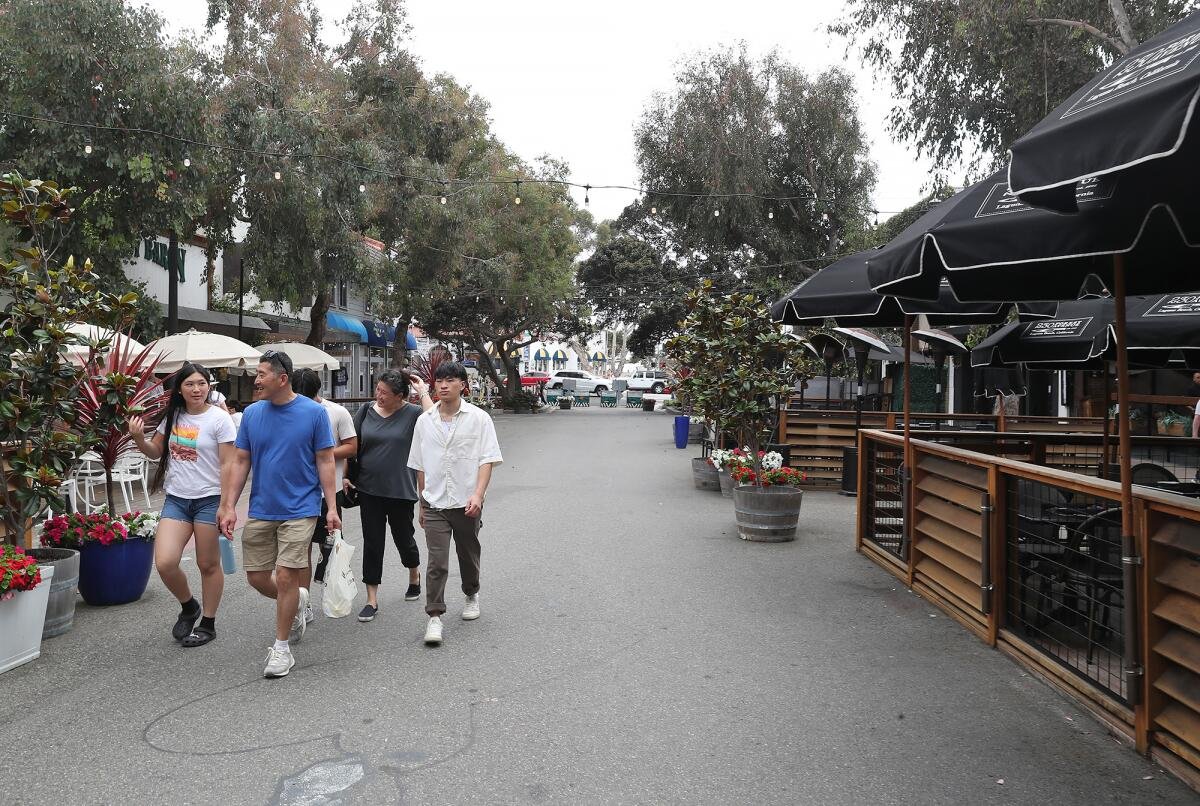
The transformation of Forest Avenue into a permanent pedestrian promenade marks a significant milestone in the evolution of downtown Laguna Beach, a coastal community that has spent decades balancing small-town charm with international tourism demand. City officials confirmed that construction on the permanent “Promenade on Forest” will begin in February, formalizing a street closure that has existed in various forms since the early days of the COVID-19 pandemic.
Forest Avenue, long considered the commercial heart of Laguna Beach, was first closed to vehicle traffic in 2020 as an emergency response to public health restrictions. The closure allowed restaurants and retailers to expand outdoors, creating a walkable corridor that quickly became one of the city’s most popular gathering places. What began as a temporary measure gradually reshaped how residents and visitors experienced downtown, prompting city leaders to explore whether the street should remain car-free permanently.
After years of public meetings, design studies, and debate, the Laguna Beach City Council approved an ordinance designating Forest Avenue as a “Slow Street,” paving the way for permanent infrastructure changes. The designation means the city will permanently eliminate 48 parking spaces along the corridor, a decision that sparked opposition from some residents and business owners concerned about access and congestion. Supporters, however, argue that the promenade’s success has proven that foot traffic, not car traffic, is the key to downtown vitality.
Construction will require the removal of temporary outdoor dining structures by the end of the month, temporarily disrupting the promenade experience residents have grown accustomed to. Once completed, the permanent plaza is expected to feature improved paving, lighting, seating, landscaping, and design elements intended to reflect Laguna Beach’s artistic heritage and coastal environment. City officials have emphasized that the goal is to create a “town center” that encourages lingering, social interaction, and cultural programming rather than simply serving as a restaurant row.
The Forest Avenue project reflects a broader shift occurring in cities across California, where communities are rethinking how streets are used and who they are designed for. In Laguna Beach, where space is limited and tourism is central to the economy, the permanent promenade represents a bet that prioritizing pedestrians will strengthen both local quality of life and the visitor experience for years to come.
